
The RTX vs GTX performance comparison is one of the most important topics for gamers who want to buy a graphics card. Both GPU series are from NVIDIA, but they are built on very different technologies. In this RTX vs GTX performance comparison, we will explain how they perform in games, editing, and real-world usage so you can clearly understand which one is better for your needs.
What is GTX?
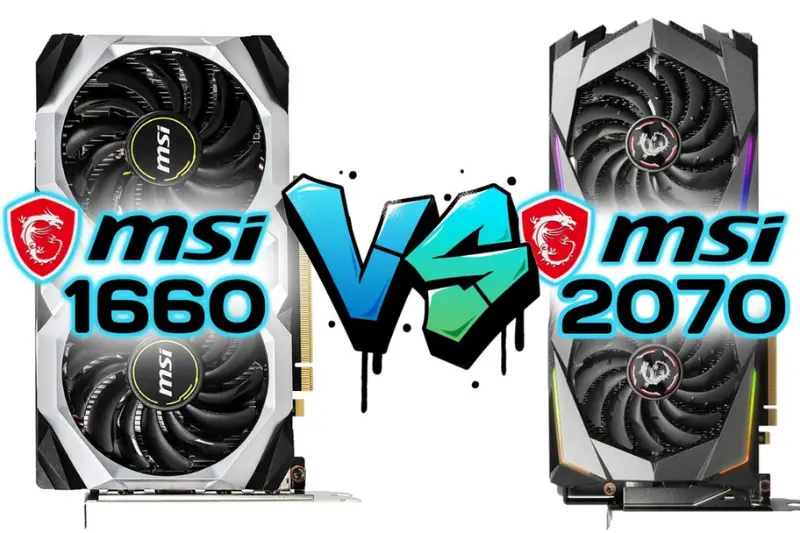
Before understanding the RTX vs GTX performance comparison, let’s look at GTX GPUs.
GTX graphics cards are older NVIDIA GPUs designed mainly for traditional gaming performance. They focus on:
- Strong FPS in 1080p games
- Simple raster graphics processing
- Lower price range
- Stable performance in older titles
GTX cards do not support advanced features like ray tracing or AI upscaling.
What is RTX?
RTX GPUs are newer and more advanced. In this RTX vs GTX performance comparison, RTX clearly introduces modern features such as:
- Ray tracing technology
- DLSS AI upscaling
- Tensor cores for AI performance
- Better support for modern AAA games
RTX cards are designed for future gaming and high-performance workloads.
Gaming Performance Comparison
In the RTX vs GTX performance comparison, gaming performance shows a clear difference.
GTX Gaming Performance
- Good for 1080p gaming
- High FPS in esports games
- Struggles in new AAA titles at high settings
- No ray tracing support
RTX Gaming Performance
- Strong performance at 1080p, 1440p, and 4K
- Smooth gameplay in modern AAA games
- Better optimization with DLSS
- Supports ray tracing effects
👉 Overall, RTX performs significantly better in modern games.
Ray Tracing Performance
A major part of the RTX vs GTX performance comparison is ray tracing.
- GTX: No ray tracing support
- RTX: Fully supports ray tracing with dedicated RT cores
This makes RTX GPUs much better for realistic lighting, shadows, and reflections in games.
You may also like to read these posts:
GPU Optimization Tips for Beginners Guide
Best GPU for Gaming Review 2026 Guide
Best GPU for Video Editing Review 2026
DLSS vs No DLSS
Another important difference in the RTX vs GTX performance comparison is AI upscaling.
RTX (DLSS)
- Boosts FPS using AI
- Improves performance without lowering quality
- Helps in 1440p and 4K gaming
GTX
- No DLSS support
- Relies only on native resolution performance
👉 DLSS gives RTX a huge performance advantage.
FPS and Real-World Performance
In real gaming scenarios:
- GTX GPUs perform well in older and light games
- RTX GPUs perform better in new and demanding games
- RTX delivers higher and more stable FPS overall
This makes RTX the clear winner in the RTX vs GTX performance comparison.
Power Efficiency and Heat
- GTX: Lower power consumption, cooler running
- RTX: Higher power usage but better performance per watt in newer models
GTX is simpler, but RTX is more powerful and efficient for heavy workloads.
Price vs Performance
In the RTX vs GTX performance comparison, price matters a lot.
GTX
- Cheaper
- Good for budget gaming
- Limited future support
RTX
- More expensive
- Better long-term value
- Future-proof technology
Pros and Cons
GTX Pros
- Affordable price
- Good for basic gaming
- Low power usage
GTX Cons
- No ray tracing
- No DLSS
- Weak in modern games
RTX Pros
- Excellent gaming performance
- Ray tracing support
- DLSS AI boost
- Future-ready
RTX Cons
- Higher cost
- More power usage
Frequently Asked Question
Is RTX better than GTX?
Yes, RTX is better in performance, features, and future support.
Can GTX run modern games?
Yes, but only at lower settings.
Does GTX support ray tracing?
No, GTX does not support ray tracing.
4. Is RTX worth the money?
Yes, especially for gaming and content creation
Which is better for budget gaming?
GTX is cheaper, but RTX offers better long-term value.
Final Verdict
In this RTX vs GTX performance comparison, RTX is clearly the better option for modern gaming and future performance. GTX is still useful for budget users and older games, but it lacks advanced features. If you want long-term value, RTX is the smarter choice.